
International Schools in Bali: A Parent’s Guide to Choosing the Right School
Choosing a school in Bali can feel like a big decision, especially when you’re also choosing where to live, settling into a new community, or helping your child adjust to a different way of life.
There are many international schools in Bali, and they don’t all approach learning in the same way. Most follow a single international framework such as the IB or Cambridge curriculum. Uluwatu School takes a different approach: rather than adopting one all-in-one programme, it builds its own curriculum by selecting specific, evidence-based frameworks for each core subject — Common Core standards for mathematics, the UK National Literacy framework for language, Emory University’s SEE Learning (Social, Emotional and Ethical Learning) framework for social-emotional development, and the UNESCO-IOC Ocean Literacy Framework for environmental learning.
There isn’t one school that will be right for every child. A better place to start is with a different question: Where will my child feel comfortable, curious, challenged and able to grow?
Once you begin there, curriculum, location, class size, community and all the practical details become much easier to consider.
Start With Your Child, Not the School Brochure
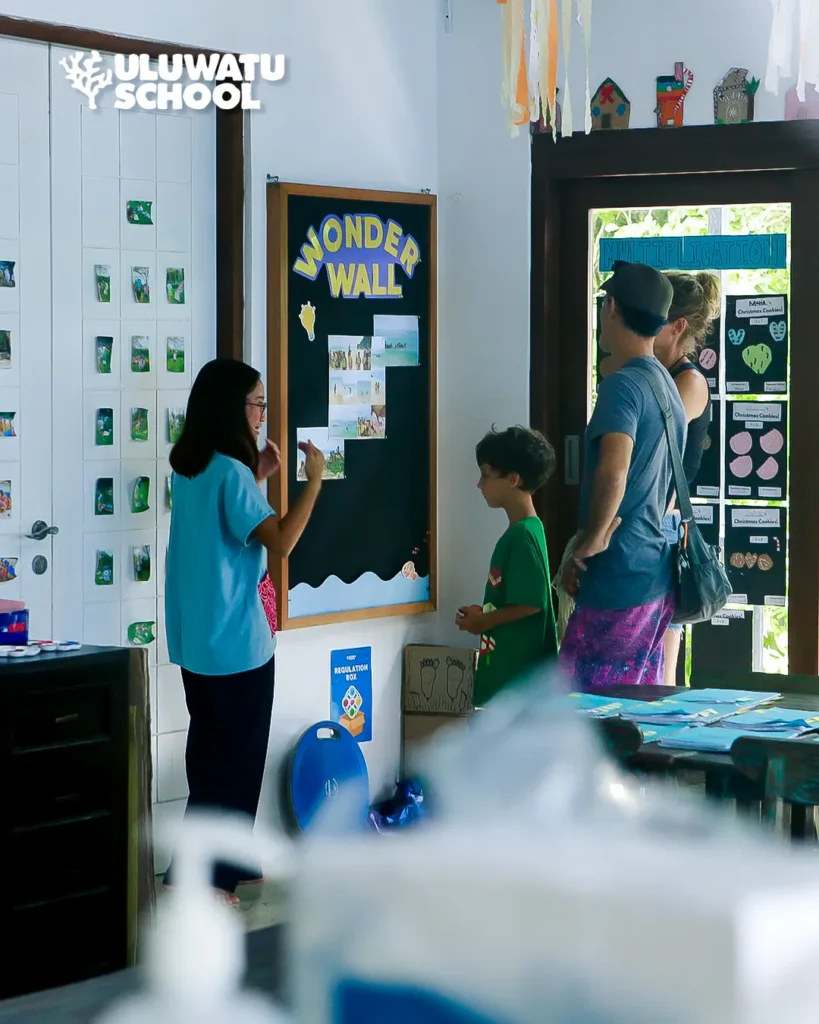
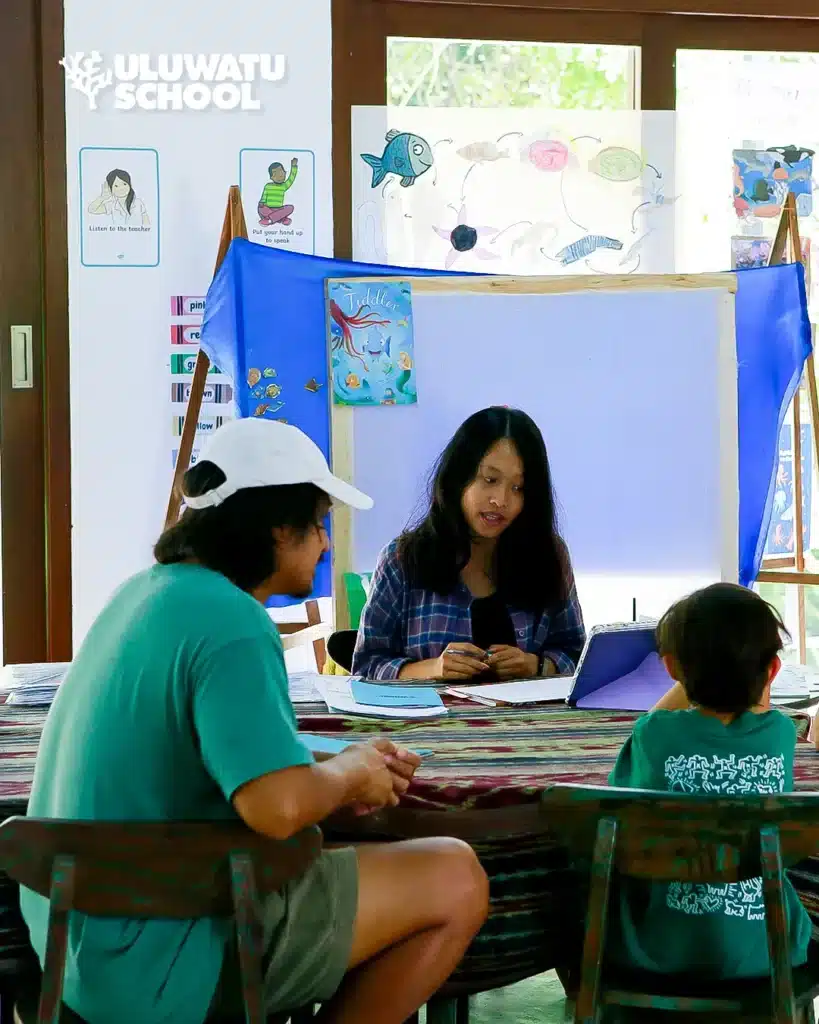
A beautiful campus can make a strong first impression. So can impressive facilities, a long list of activities or a familiar curriculum. But your child will experience the school very differently from you.
Think about the environment where they tend to thrive. Do they enjoy having clear routines and structure? Perhaps they become more engaged when they can ask questions and explore an idea for themselves. They may also enjoy working independently while benefiting from conversations and collaboration with others.
Some children are comfortable speaking up in a large group. Others need time, familiarity and stronger relationships before their confidence emerges. Neither is better. What matters is finding an environment that understands how your child learns and gives them enough support and challenge to keep moving forward.
It can help to ask yourself:
- What makes my child genuinely curious?
- When do they seem most confident as a learner?
- How do they respond when something is difficult?
- Do they enjoy learning through discussion, movement, making, reading or practical experiences?
- Would they feel more comfortable in a smaller community or a larger school?
- Is there any academic, social, emotional or language support they may need?
These questions tell you much more about fit than a list of facilities ever could.
Understand the Learning Approach, Not Just the Curriculum Name
Curriculum is naturally one of the first things parents compare when looking at international schools in Bali. For families who may return home or move to another country in the future, understanding how learning connects with the child’s next school can be particularly important.
But a curriculum name doesn’t tell you everything about what happens between the beginning and end of a school day. It’s worth asking a school exactly which frameworks it uses and why, rather than accepting a single label.
Look at the academic foundations
At Uluwatu School, the academic foundations are built subject by subject rather than adopted as a single package:
- Mathematics is taught through Number Enquiry, grounded in Common Core standards, so children build problem-solving and real-world maths skills rather than memorising procedures in isolation.
- Literacy is taught through Language Arts and Communication, built on the UK National Literacy framework, covering reading, writing and spoken communication.
- Social-emotional development runs through SEE Learning (Social, Emotional and Ethical Learning), a framework developed at Emory University, embedded into daily practices such as morning check-ins, breathwork and journaling rather than taught as a separate subject.
- Environmental learning runs through Ocean Literacy, grounded in the UNESCO-IOC Ocean Literacy Framework for the UN Decade of Ocean Science for Sustainable Development, connecting classroom learning to the coastline and ecosystems of the Bukit Peninsula.
Whichever school you’re comparing, ask the same questions:
- How is progress monitored?
- What happens when a learner needs more support?
- What happens when they are ready to go further?
A good conversation about curriculum should help you understand not only what children learn, but how the school knows that learning is taking place.
Ask how children actually learn
Walk into two schools covering a similar subject and the experience may look completely different. In one classroom, an educator may introduce a concept before children practise it independently. In another, learners may begin with a question, investigate it in groups, test different ideas and eventually present what they have found.
Uluwatu School sits firmly in the second camp. Rather than relying on conventional, desk-based classroom instruction, learning is built around experiential and project-based work: children investigate real questions, work hands-on with materials and the local environment, and apply what they learn to genuine projects rather than practising skills in isolation. In the Primary Programme, this takes the form of hands-on, project-based learning inspired by ocean science, storytelling, design and environmental care. In Middle School, it takes the form of Reef to Reef, an interdisciplinary programme that moves learners from fieldwork in the Bukit Peninsula, to storytelling and a global short film project exploring central Bali, to an independent research project and a student-led symposium in Grade 8.
Many schools combine several approaches — enquiry-based learning, projects, direct instruction, collaborative learning, outdoor education, creative work and real-world experiences. Rather than looking for the approach that sounds most impressive, look at how thoughtfully it is used, and how much of a typical week is spent in each mode. Ask the school to show you what learning actually looks like.
Think about what comes next
Your family’s plans matter too. If you expect to stay in Bali for several years, your priorities may be different from those of a family planning another international move.
Uluwatu School currently teaches Grade 1 (age 6) through Grade 8, and is expanding to open Grade 8 in August 2027 as the school grows with its existing cohort. If you’re evaluating any school, ask which year levels it currently offers, how learners progress through them, and where they commonly continue their education afterward.
Think About Where Your Child Might Go Next
If there’s a real chance your family will move again, or your child may eventually apply to a school or university in another country, it’s worth asking a direct question early on: will this school’s records be recognised if we leave?
Uluwatu School is a legally recognised primary school in Indonesia and is currently working toward formal accreditation, targeted for 2027. Middle school will be legally recognised in August 2027. Families have already transferred from Uluwatu School into IB programmes and schools in Europe. In practical terms, this means:
- Records and reports from Uluwatu School are issued by a licensed, legally operating institution.
- Ask the admissions team directly what documentation they provide for transferring learners, particularly if you’re already considering a specific destination school or country.
- It’s also worth asking whether the school has supported families transferring to specific countries or systems you’re considering, and what that process was like.
These questions matter most for families who expect to move again, or whose children may need to enter a national exam system, an IB or Cambridge programme, or a university application process later on.
Look Beyond Academics
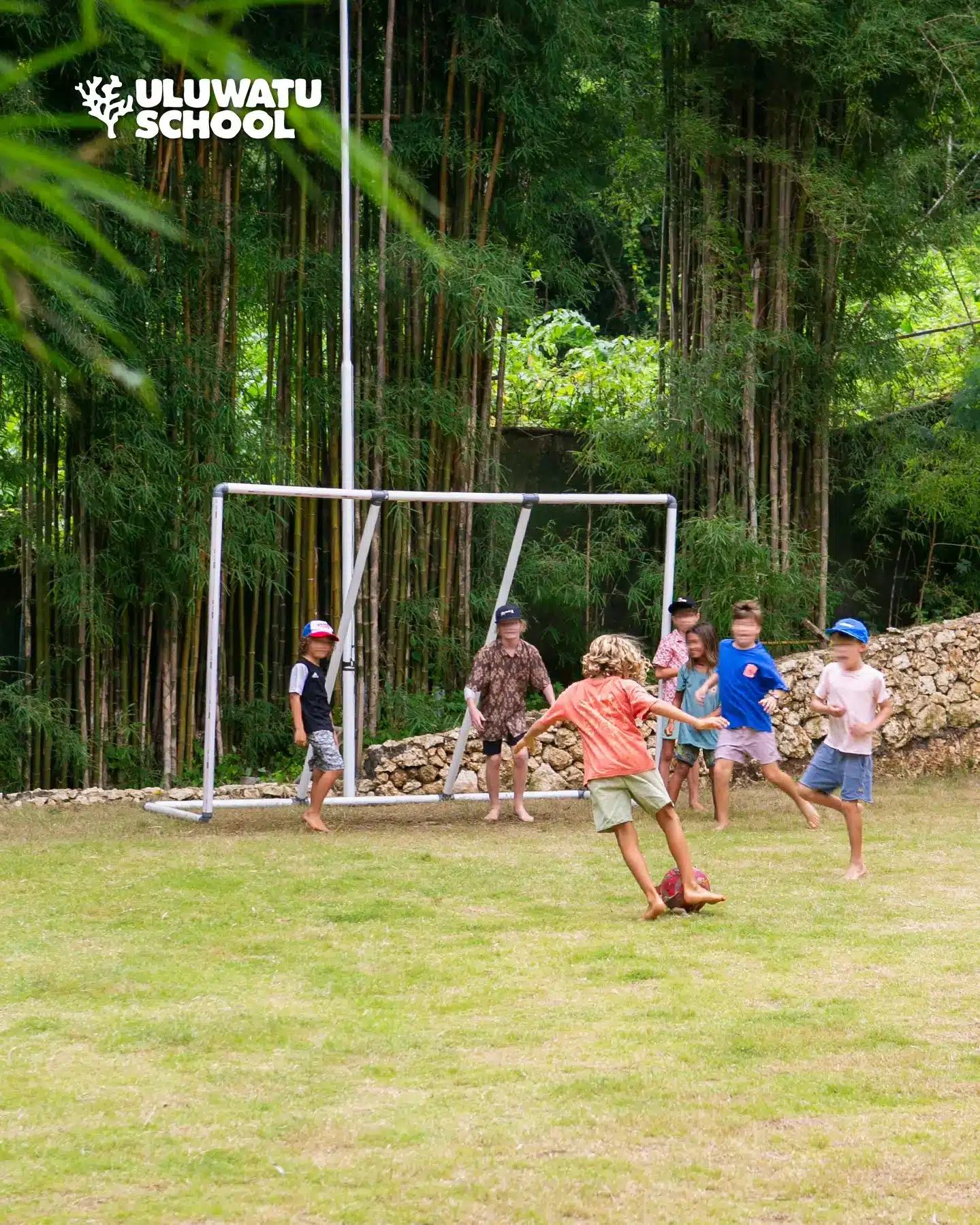
Children spend a significant part of their lives at school. They learn maths and language, but they are also learning how to make friends, express ideas, deal with frustration, solve disagreements, take responsibility and become more independent. That makes the emotional and social environment worth looking at closely.
- Does your child feel that they could belong there?
- Can learners make mistakes without feeling embarrassed?
- Are children comfortable asking educators for help?
- How does the school respond when friendships become difficult?
- How are confidence, empathy and emotional awareness supported alongside academic learning?
These things can be difficult to measure on a school comparison table, but they shape a child’s experience every day. A child who feels safe, known and connected has a much stronger foundation from which to learn.
This is also where extra-curricular activities matter more than they first appear to. A child who gets to spend real time on something they already love, or discovers something new outside the classroom, builds a different kind of confidence than academic work alone provides — more on this below.
Consider the Size of the School and Learning Community
School size can change the experience considerably. A larger international school may offer extensive facilities, a wide range of activities and a large community of children from different backgrounds.
A smaller school can offer something different. Educators may know learners across year levels, relationships can form quickly and children may experience a stronger sense of familiarity within the wider community.
Neither model automatically creates a better education. Think instead about your own child. Ask about class sizes and learner-to-educator ratios, but also pay attention to what those numbers look like in practice. One simple question can be surprisingly useful: Would my child feel seen here?
Where You Live in Bali Matters More Than You Might Expect
Looking at a map can make distances in Bali appear relatively small. Daily life can tell a different story.
International schools are spread across different parts of the island, including Sanur, Ubud, Canggu and the Bukit Peninsula in South Bali. Uluwatu School is based in Pecatu, on the Bukit Peninsula, close to families living around Uluwatu, Bingin, Balangan and Jimbaran. Traffic, school start times and your family’s daily routine can turn location into a much bigger consideration than it initially appears.
Think about the school run
Try the journey at the same time you would normally travel to school. A route that feels easy in the middle of the day may be quite different during the morning. Consider what that journey would feel like five days a week, not just during your school visit.
Less time travelling can mean more time for children to play, rest, join activities or simply be at home.
Look at life around the school
School isn’t the only part of your family’s routine. Think about where parents work, where children might have activities, where their friends are likely to live and how you want to spend your weekends.
For some families, being close to the ocean and outdoor life is important. Others may prioritise being close to established residential areas, services or particular communities. The school and the family’s wider life should work together.
If you’re relocating, consider school and home together
Families moving to Bali sometimes choose a house first and begin researching schools afterwards. It can be useful to reverse that process, or at least make both decisions together. Finding the right school only to discover that it involves a difficult daily commute can quickly change the experience.
Ask How Bali Becomes Part of the Learning
One of the unusual things about going to school in Bali is the environment beyond the school gate. Children are surrounded by a living culture, local communities, tropical ecosystems and, particularly in South Bali, a close relationship with the ocean. That creates opportunities for learning that don’t exist everywhere.
The question is whether a school uses them.
- Does learning stay mostly inside the classroom, or can children investigate the world around them?
- Can science lead to observations outdoors?
- Can environmental learning involve real ecosystems?
- Can children develop a deeper understanding of the place and community in which they live?
A lesson about tides, for example, changes when a learner can observe the coastline and begin asking why the water moves the way it does. A conversation about waste becomes more immediate when children can investigate where rubbish goes and how it can eventually reach the ocean.
The environment doesn’t replace academic learning. It can give that learning context.
At Uluwatu School, this connection runs through Ocean Literacy and Environmental Learning, grounded in the UNESCO-IOC Ocean Literacy Framework developed for the UN Decade of Ocean Science for Sustainable Development (2021–2030), and woven into both the Primary Programme and the Middle School’s Reef to Reef programme, where the local environment becomes one of the places from which questions, investigations and meaningful learning can begin.
Think About Community, Not Only the Classroom
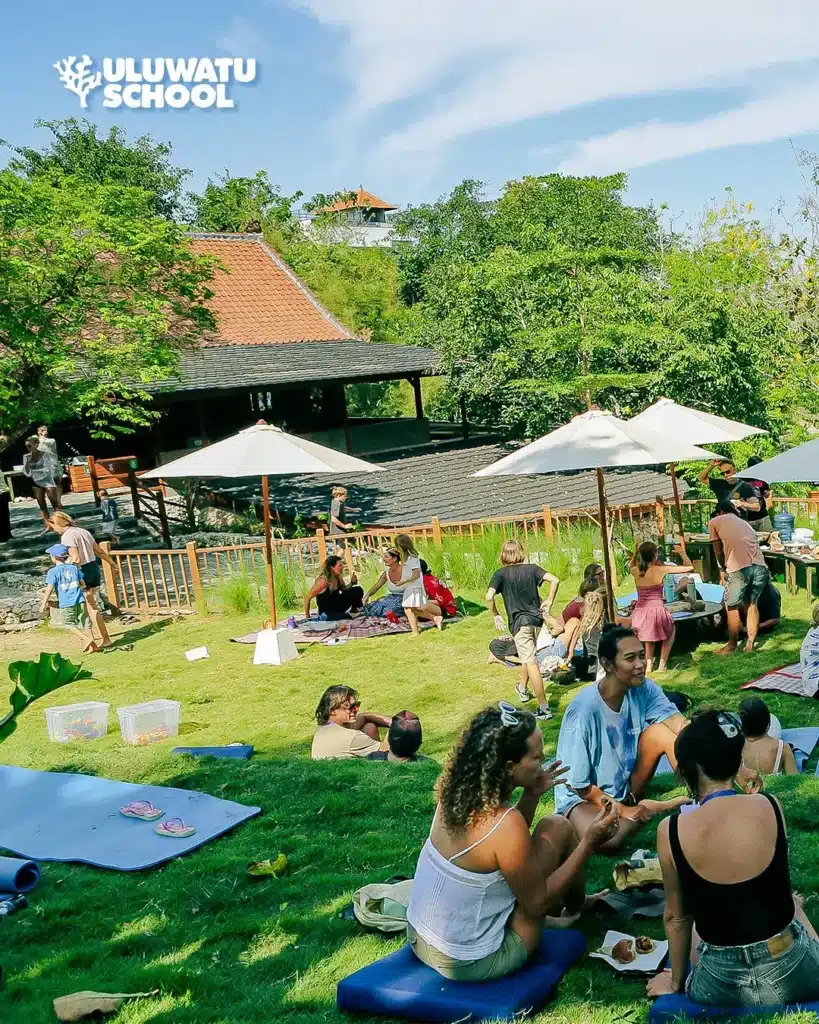
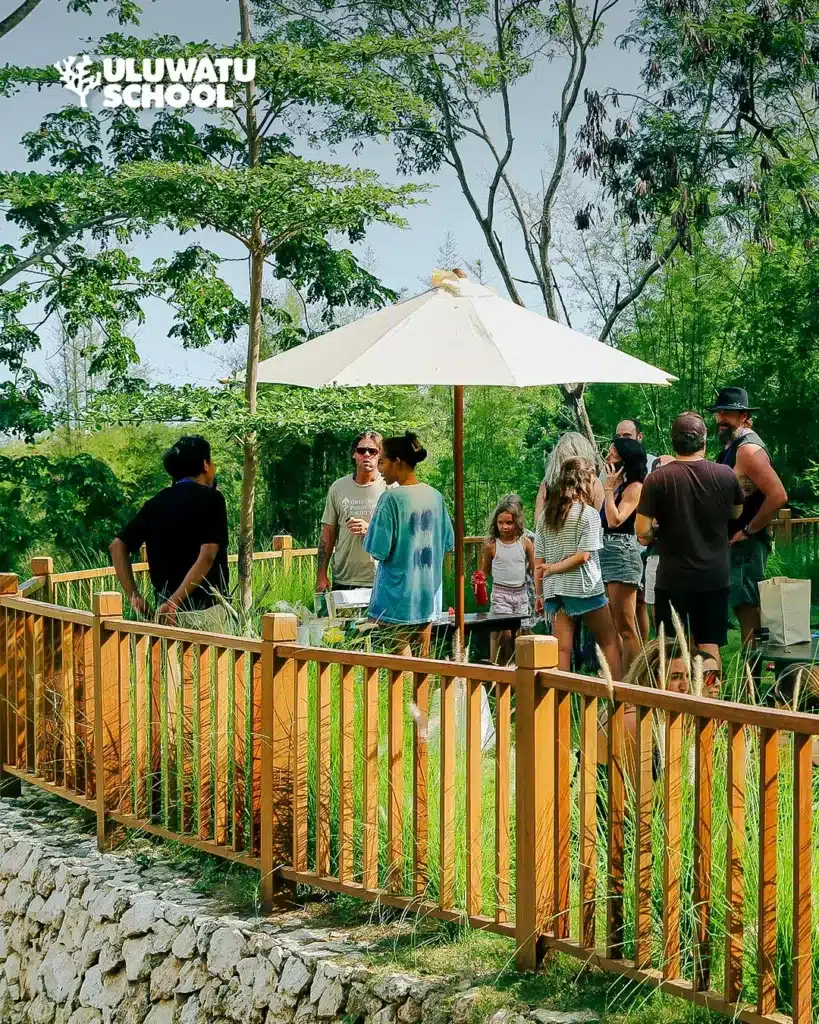
When a child joins a school, the family usually joins a community too. This can matter even more when you’ve recently moved to Bali. A welcoming school community can help children establish friendships while giving parents an opportunity to meet other families who are going through, or have already experienced, similar transitions.
During your research, ask how new families are welcomed. Find out how educators communicate with parents and how families can participate in school life. You might also want to understand how the school connects with the wider community around it.
A healthy school community doesn’t mean everyone has the same background, lifestyle or ideas. Quite the opposite. International education can give children the opportunity to grow alongside people with different experiences and perspectives while still developing a strong sense of belonging. Uluwatu School welcomes both Indonesian and international families, with separate tuition schedules for each.
Look at What Happens Beyond the School Day
Children’s interests don’t always fit neatly into academic subjects. One child might want to spend every spare moment in the ocean. Another may be drawn to music, drawing, football, building things or performing.
Look at what happens beyond regular lessons. Schools may offer sports, clubs, creative programmes, outdoor activities, community projects, excursions and other opportunities to explore interests. At Uluwatu School, this includes a weekly Saturday Programme and after-school activities ranging from surfing, chess, music and dance to padel and swimming.
Don’t worry too much about which school has the longest list. Instead ask: Are there opportunities here that my child would genuinely want to explore?
Interests change as children grow. Having room to try something new can be just as valuable as continuing something they already love.
Understand the Practical Details Before You Decide
Once you feel comfortable with the school’s learning environment, it’s time to look closely at the practical side. Make sure you understand which ages and year levels the school accepts, its calendar, the language used for learning, tuition fees and any additional costs, admissions requirements, transport options, learning or language support, and how learners progress into future year levels.
If something isn’t clear, ask.
Fees
The advertised tuition may not represent the complete annual cost once registration, materials, activities, transport, meals, trips or other charges are included. A good admissions team should be able to explain clearly what your family can expect.
At Uluwatu School, for the 2026–2027 academic year, annual tuition for international learners ranges from IDR 124,800,000 in Grades 1–2 up to IDR 156,000,000 in Grades 7–8, with a semesterly option available at a 3% premium. Indonesian learners (with proof of Indonesian national identity) are charged a separate, lower schedule, from IDR 87,360,000 to IDR 109,200,000 annually. On top of tuition, families should budget for a one-time application fee (IDR 3,000,000), a one-time registration fee (IDR 12,000,000), an annual capital levy (IDR 20,000,000), an annual materials and resources levy (IDR 4,000,000), and a refundable security deposit (IDR 10,000,000) held for the duration of enrolment. A sibling discount applies from the second child onward once all siblings have completed a full academic year. Full current figures and payment terms are on the Tuition Fees page.
Calendar
Uluwatu School follows an August-to-June academic year, split into two main semesters beginning in August and January, with July as the summer break. The full calendar is published annually with term breaks, holidays and key events.
Visit the School and Pay Attention to What You See
A school visit tells you more than any brochure can. Look at classrooms, outdoor spaces and facilities. But try not to spend the whole visit looking at buildings.
Watch the people.
- How do children speak with educators?
- Do learners seem comfortable asking questions?
- Are educators mostly talking at children, or are there genuine conversations taking place?
- Can children explain what they’re working on?
- Do you see learners discussing, reading, creating, investigating or solving problems?
Look at classroom walls too. Are you seeing polished displays created mainly for visitors, or evidence of children’s thinking, questions, mistakes, projects and work in progress?
And pay attention to the moments between lessons. Sometimes the clearest sense of a school comes from the parts of the day that weren’t prepared for your tour.
You can book a tour of Uluwatu School directly online, or join a Virtual Open Day if you’re not yet in Bali.
Questions Worth Asking During a School Tour
You don’t need to arrive with a long checklist. A few thoughtful questions can reveal a great deal about how a school works.
Consider asking:
- What does a normal learning day look like here?
- How do you know when a child is making good academic progress?
- What happens when a learner is struggling?
- How do you challenge a child who is ready to go further?
- How much learning happens through projects or real-world experiences?
- How do you support children joining from another country or school system?
- How do you approach social and emotional learning?
- How do educators communicate with parents?
- How are children encouraged to become more independent?
- Where do learners commonly continue their education after leaving the school?
Listen not only to the answers, but also to how specific they are. When a school talks about curiosity, ask to see what that looks like in the classroom. For community, find out how families are involved in school life. And if outdoor learning is important, ask where children actually go and what they learn from those experiences.
Good educational ideas should be visible in everyday practice.
Give Your Child a Voice in the Decision
Parents carry the responsibility for choosing a school, but children can tell us things adults sometimes miss. If your child is old enough, involve them in the process.
After a visit, resist the temptation to immediately ask: “Did you like it?” Try questions that leave more room for reflection.
- What did you notice?
- Was there anything you wanted to join in with?
- What looked interesting?
- Was anything uncomfortable or confusing?
- Could you imagine spending your days there?
- Who did you talk to?
You may get very different answers from the ones you expected. A swimming pool or football field might initially attract their attention. But they may also tell you about an educator who listened to them, a project they wanted to try, or another child who made them feel welcome.
Those small observations matter.
FAQ
The Right School Should Make Sense for Your Family

Choosing among international schools in Bali involves practical decisions about curriculum, fees, location and future pathways. But there is another part that’s harder to put into a spreadsheet.
The right environment should be somewhere your child can feel they belong. A place where they can become curious about something new, work through challenges, build friendships, make mistakes, ask questions and gradually grow more confident in who they are. That’s ultimately what the school will become: a place where a significant part of their childhood unfolds.
At Uluwatu School, we approach learning through our four aspirations — Curiosity, Connection, Collaboration and Contribution — favouring experiential, project-based learning over conventional, desk-based instruction. Strong academic foundations, built from Common Core mathematics, UK National Literacy, and Emory University’s SEE Learning framework, sit alongside active enquiry, hands-on projects, and Ocean Literacy experiences grounded in the UNESCO-IOC framework, connecting learners with the world around them across Grades 1–8 in Pecatu, Bali.
If you’re considering schools in South Bali, come and spend some time with us. Book a tour, walk through the learning spaces, meet our educators, see what learners are working on, and bring your child.
Because choosing the right school shouldn’t only make sense on paper. It should feel right when you’re there.